Workflow automation, AI assistants and internal tools for tasks such as routing records, finding information and preparing drafts across your existing systems.
Start with one well-defined workflow.
We map the current task, review the systems and data involved, and agree a pilot with clear acceptance criteria. Permissions, human review, running costs and ownership are defined before the build.
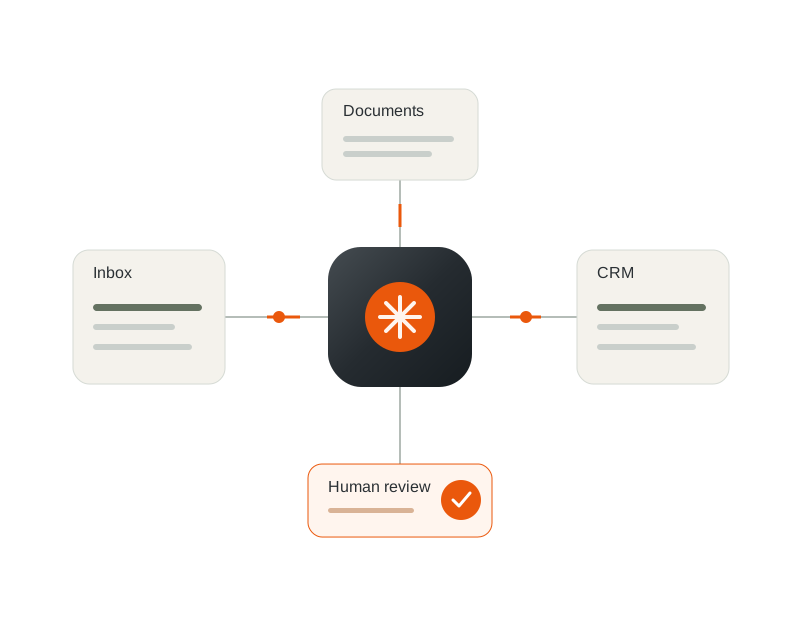
Workflow setup and handover
Workflow plan & acceptance criteria
A map of the task, inputs, outputs and exceptions, with agreed measures for deciding whether the pilot is useful.
Automation or AI assistant
The agreed workflow, assistant or internal interface for defined tasks, using AI where the task calls for it.
System & data connections
Agreed integrations with your tools and data sources, with documented permissions, providers and data handling.
Testing, review & handover
Testing on agreed examples, human approval and exception handling, plus operating guidance. Ongoing monitoring and changes are scoped separately.
Map the task, test the pilot, then review.
Map
Review the task, systems, data and exceptions.
Scope
Agree the pilot, permissions, review steps and cost.
Build & test
Connect the workflow and test agreed examples.
Review
Assess the pilot and agree handover or further work.
Common
questions
Does every automation need AI?
No. Rules can handle tasks with predictable inputs and steps. AI can help with language or unstructured information. We assess the task before choosing the tools.
Can we start with a pilot?
Yes. We can begin with one workflow, agreed success criteria and a review point. You can assess the results before deciding on further work.
What access and data do you need?
We identify the systems, APIs and test data the workflow needs, then agree permissions. We review model providers, data handling and your privacy requirements before implementation.
How are errors and actions handled?
We define what the system can read, draft or change, and which actions require human approval. Testing includes failure cases, with a process for passing exceptions to a person.
How do you estimate costs and benefits?
We review task volume and the current process, then estimate the build cost. API usage, model fees, hosting and subscriptions are listed separately. Any expected time savings are assessed during the pilot.
Who operates the workflow after handover?
We agree account ownership, operating guidance and responsibility for exceptions. Ongoing monitoring, provider changes and further workflows can be arranged separately.
Discuss
your automation needs.
Describe one task, the tools involved and what currently takes time. We’ll review whether a pilot is suitable and discuss scope and running costs.